
Toms River Resident Lookup Records
A useful Toms River resident lookup has separate lanes for separate questions. Toms River Township tax and GIS material gives parcel context. The Ocean County Clerk records transfers of land. State election tools address registration rather than a full address history. Court indexes identify a named party in a case, and vital or probate sources can support a family connection. A public business or license result can show an affiliation, but a principal or agent address is not proof of a private residence. Keep the record type and its date with every result.
| Record | What It Can Confirm | Custodian | Access Boundary |
|---|---|---|---|
| Property or tax record | Parcel owner, situs, mailing address, block and lot | Toms River Tax Assessor | Mailing address does not prove occupancy. |
| Recorded deed | Grantor, grantee, transfer date, instrument and legal description | Ocean County SearchNG | Index begins April 1, 1977; images and copies have controls. |
| Voter status | Registration status and municipality context | NJ Voter Search | Live fields were not verified; lists use the Election Board path. |
| Court docket | Party, venue, docket, caption, filing date and available entries | NJ Courts | Only public portions are available. |
| Vital record | Family event, date, and relationship evidence | Toms River Registrar | Certified copies require eligibility and identification. |
| Probate file | Decedent, executor, heirs, and estate chronology | Ocean County Surrogate | Sensitive filings may be restricted. |
| Business or license record | Public entity or credential affiliation | NJ DORES or state licensing boards | A business address is not a residence finding. |
When the known fact is an address, use the Toms River parcel and deed layers first. When it is a name plus a possible court event, start with the court system and use place or date details to separate people with the same name. Older family-history work often needs the Archives, the Surrogate, or local collections rather than a current online tool.
Toms River Resident Name Variants
Check the supplied spelling before treating a Toms River result as a match. Search initials, middle names, former names, abbreviations, and plausible spelling variants. The County Clerk specifically advises variant searching in SearchNG. A deed can list one person as a direct party and another as an indirect party, trustee, attorney, or entity representative. Those roles matter. The same caution applies to a court caption, where a person can appear as a plaintiff, defendant, attorney, or witness.
Compare non-sensitive facts that belong to the record itself: municipality, Toms River court venue, year, school year, public business affiliation, family relationship, or parcel block and lot. Do not try to resolve a match with protected identifiers, a signature, a driver credential, or a protected address. A 2014 directory entry, a later deed, and a current status result describe different dates. The stronger conclusion comes from a sequence that fits both the person and the time.
Note: A record's date and role are stronger match checks than a spelling resemblance alone.
Toms River Resident Court Searches
New Jersey does not use one court screen for every Toms River matter. The public search landing page separates civil and foreclosure, criminal, criminal judgments, judgment liens, Tax Court, and municipal routes. Toms River Municipal Court handles local ordinance, traffic, DWI, and disorderly-persons or criminal matters, while Ocean County Superior Court sits in Vicinage 14. Federal cases use PACER and federal clerk channels, not the state portal. Select the case category before reading a name result.
| NJ Courts Special Civil Control | How It Works |
|---|---|
| Search By Docket Number | Direct route when a docket is already known. |
| Search By Party Name | Name route for an individual or business party. |
| Search By Judgment | Judgment-specific route. |
| Last Name and First Name | Both are required for the party path; three or more characters broadens a name search. |
| Middle Initial | Optional field that can narrow a common name. |
| CAPTCHA | Required before the captured search can run. |
The NJ Courts public search is shown in this official search screen.
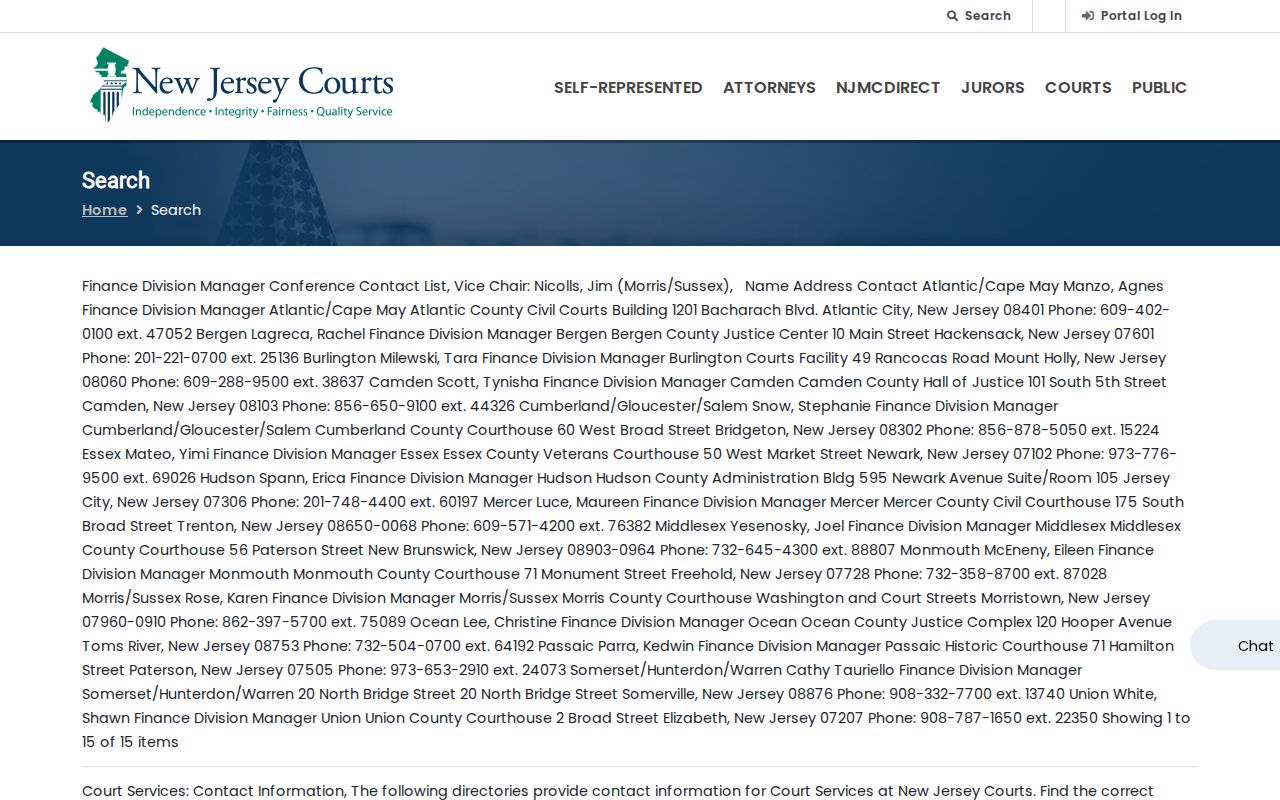
Use the appropriate Toms River route, then verify a result by venue, party role, docket number, and case date rather than by the name alone.
Toms River Docket Record Details
A docket is the court's numbered case record. In the Judiciary's public case-jacket example, a Toms River result identifies the name, venue, docket number, case caption, and case-initiation date. Opening the docket can reveal available entries and documents, including proceedings, orders, or motion dispositions. Exact fields differ by case system. Read the disposition and dates before drawing any conclusion from a docket hit.
The captured case-jacket inventory includes the following actual result and file elements:
- Individual or business party selection, last name, first name, optional middle initial, and CAPTCHA.
- Name, venue, docket number, case caption, and case-initiation date on the result list.
- A docket-number link that opens the available case jacket.
- Document and entry lists, with available proceedings, orders, and motion dispositions.
- Access limits for sealed, expunged, juvenile, adoption, and restricted family material.
The Toms River Municipal Court routes local case access through the state system and gives its clerk contact.
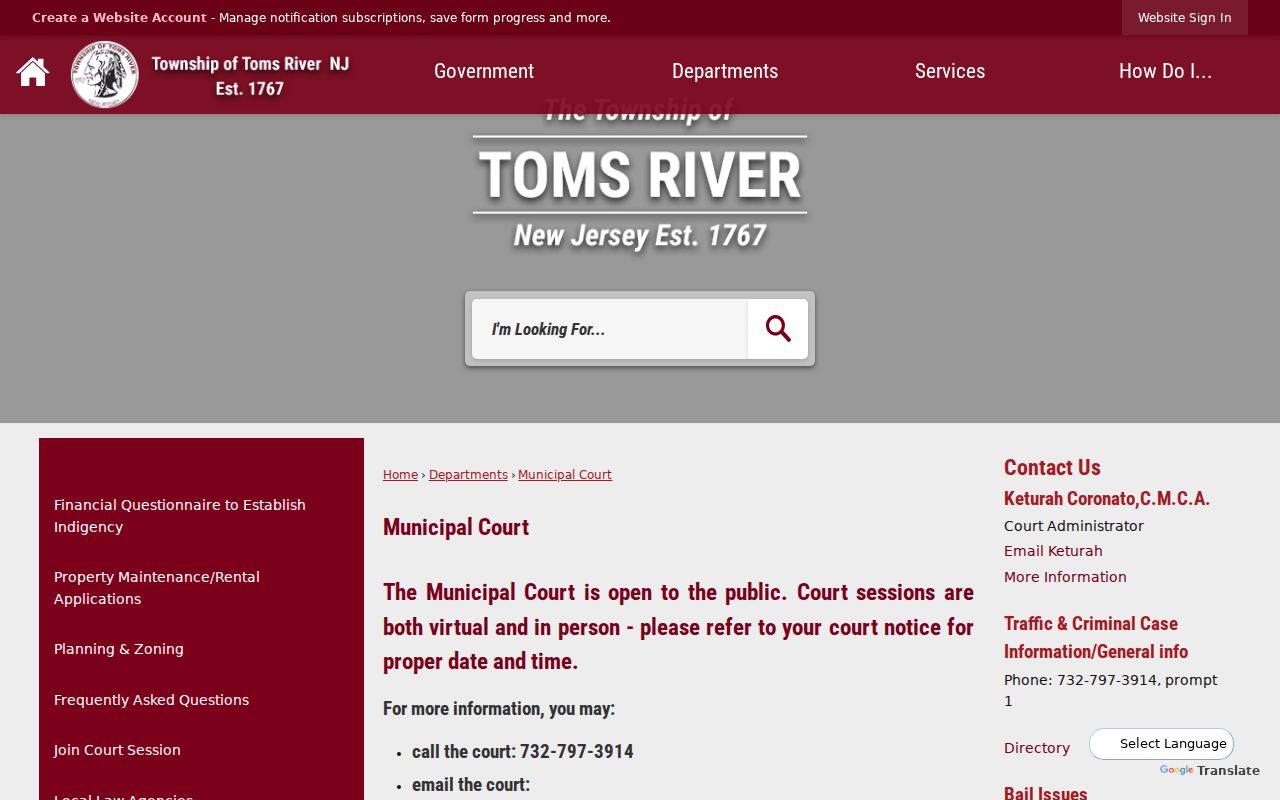
For a Toms River document that is not available online, use the Judiciary record-copy form or ask the court clerk which custodian holds the requested file.
Verify a Toms River Resident Lookup
Use a Toms River resident lookup as a cross-check, not a single search. Begin with a public record that places the person in time and place. Then test whether a separate source agrees without forcing a match. A parcel record may distinguish the situs address from the owner's mailing address. A court result may identify a venue and party role. A voter check concerns registration context. Each layer answers a narrow question, so record the date examined and the fact it actually supports.
- Write the full name, variants, date range, and the known Toms River or Dover connection.
- When a parcel link is appropriate, compare block and lot, situs, and mailing information through the tax or GIS layer.
- Search the name in the relevant NJ Courts category and confirm venue, docket, role, and initiation date.
- Use voter status, a deed, historic index, probate file, or eligible vital request only to test the specific connection still in question.
- Docket
- A court's numbered case file and its running list of entries.
- Index and image
- An index identifies a record; an image is the displayed or copied document itself, which may have separate access rules.
- Certified copy
- A custodian-issued copy used when official certification is needed, subject to that custodian's eligibility and fee rules.
Toms River Voter Status Records
New Jersey separates the public “Am I Registered?” status check from the fuller voter-registration file. The direct Voter Search endpoint could not be inspected because it returned a 403 during research. Its exact live labels, required fields, CAPTCHA, and result wording should not be guessed. Use the state tool for a Toms River status question, not as a complete address display. Voter participation does not reveal ballot choices, and protected addresses or signatures are not suitable for a resident directory.
The New Jersey voter-registration page links the state status route and registration information.
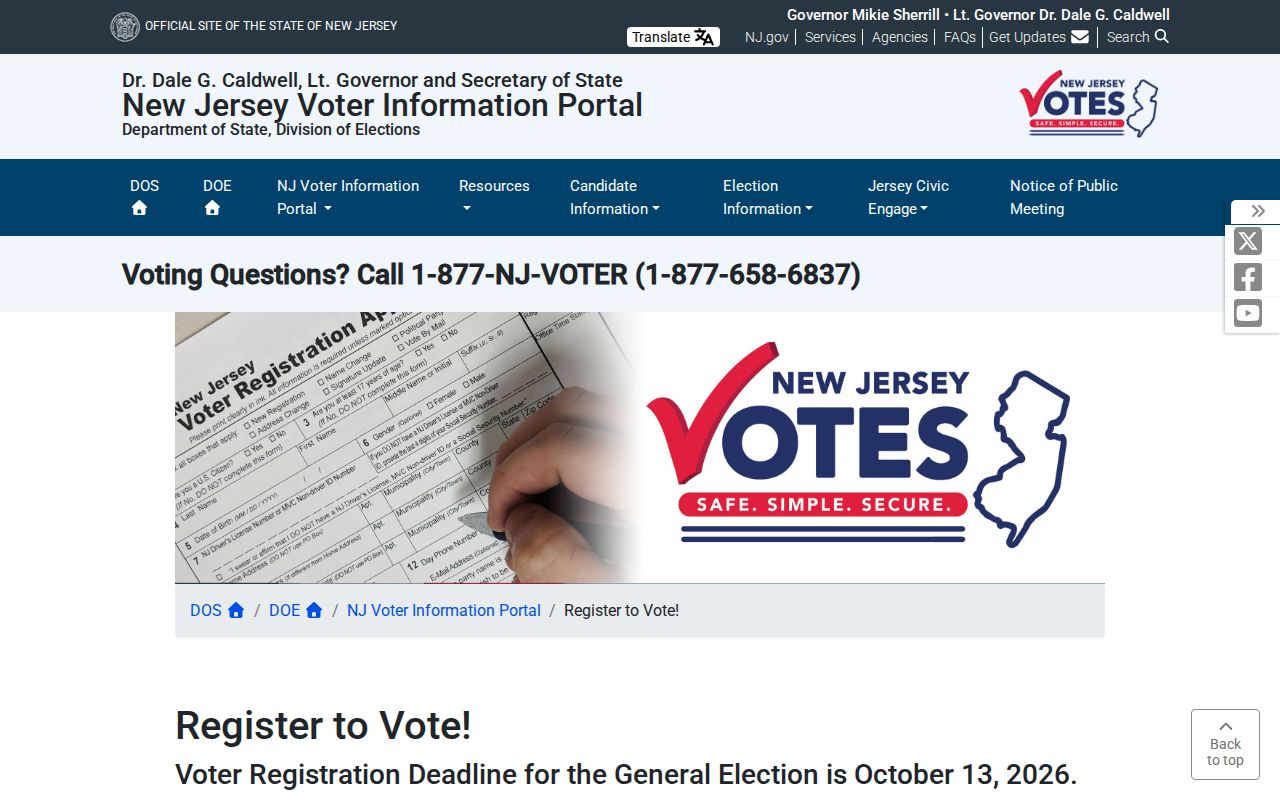
For a defined Toms River government record, the Ocean County Election Board request channel directs requesters to its OPRA process. A request should name the record, time period, and needed format rather than seek a general person file.
Toms River Vital Record Paths
Birth, marriage, and death records do not function as a public Toms River resident lookup. The local registrar keeps Toms River events from 1937 and offers certified birth, marriage, and death order paths, but its records are not an open online name search. An eligible requester needs identification and relationship or interest proof. The local portal states a $15 certified-record charge plus a nonrefundable $5 online service charge, with processing stated as five to seven business days. Verify the current order screen before paying.
Older genealogy work follows a different clock. The New Jersey State Archives genealogy collections cover births from 1848 through 1925 and marriages and deaths from 1848 through 1950, with mail and in-person research. The state health ordering channel handles state copies under its own eligibility rules. For an adoption connection, use the official adoption and registry paths, where release of identifying information is controlled.
The New Jersey vital-record ordering page shows the state application and eligibility route.
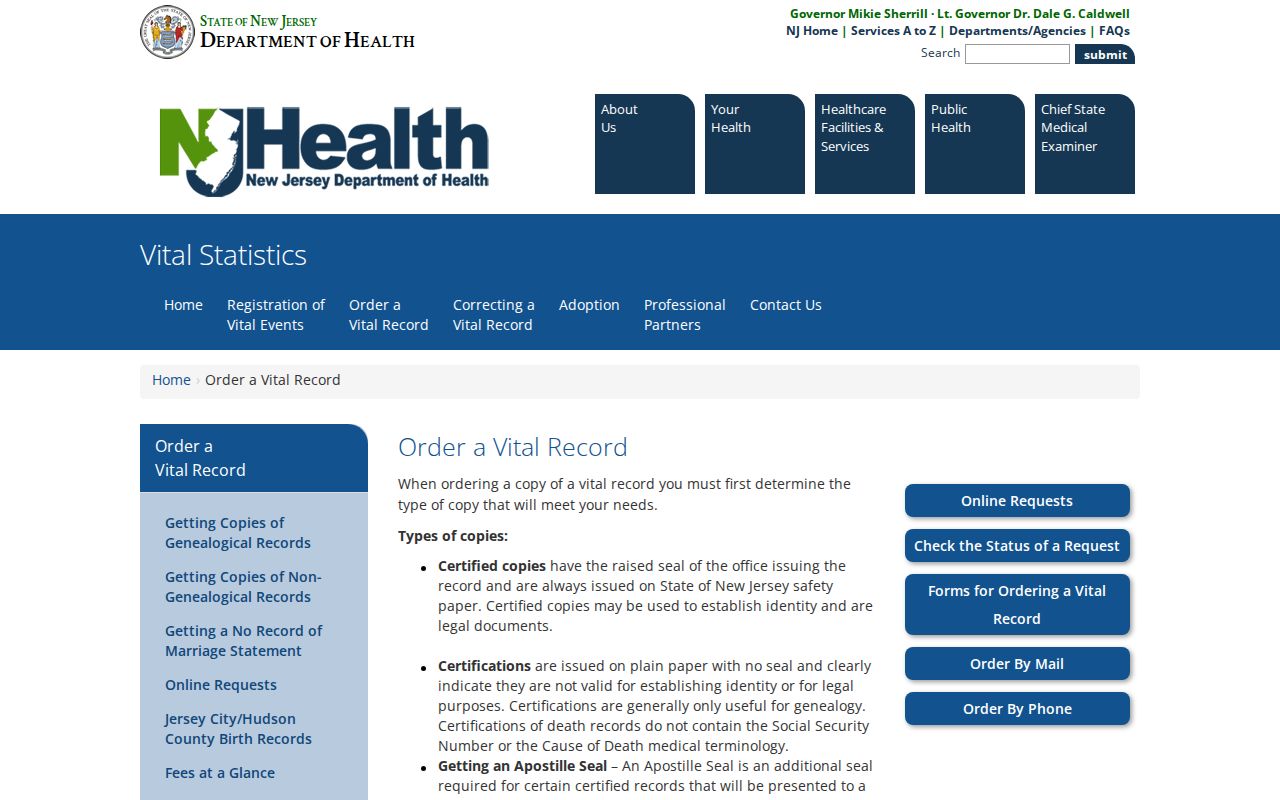
A certificate, historical index, and court file answer different questions. Confirm whether Toms River is the event municipality and check the record year before choosing the custodian.
Note: An historical index can aid genealogy but does not replace an eligible request for a certified record.
Dover Names in Toms River Records
Toms River Township was formerly Dover, with the municipal name changing in 2006. That local change creates a practical lookup quirk: an older deed, school file, obituary index, or family record can use Dover or Dover Township even when the present search is for Toms River. A 1973 street-name ordinance adds another possible mismatch between a historic address and its current name. Preserve the wording found in the source before translating it into a modern label.
For a former resident, the Toms River city directory collections and Ocean County Historical Society materials can supply phone directories, yearbooks, newspapers, obituaries, family files, and maps. They are historical context, not proof of a current address. Search the municipality name, former street name, current street name, block and lot, and surname variants separately when a simple name query fails.
Toms River Offline Record Channels
A Toms River online result often stops at an index entry. For a specific deed image, contact the Ocean County Clerk. For a probate or heir question, use the Surrogate. For court copies, use the Judiciary record-copy form rather than county OPRA. For voter material, contact the Election Board. A vital certificate goes to the registrar or state health office, and older local history may require the library or historical society. The custodian matters more than the search phrase.
New Jersey's Open Public Records Act, P.L. 2001, c.404, N.J.S.A. 47:1A-1 et seq., is a route for an identifiable existing government record. It does not require an office to assemble a Toms River cross-agency resident profile or answer an open-ended research question. Give one custodian the person or address, date span, record type, preferred format, and willingness to pay any permitted copy cost. Requests may be made through the documented online, mail, counter, or phone channels for that office.
Note: The county-seat offices are close together in Toms River, but each office keeps different records and applies its own access rules.
Toms River Resident Lookup Limits
Some gaps are intentional. Juvenile, adoption, sealed, expunged, protected-victim, confidential family, and restricted medical or mental-health court material is not open in the same way as an ordinary Toms River docket. The New Jersey Address Confidentiality Program provides a substitute address for qualifying people, and Daniel's Law can protect covered persons' home address and unpublished phone number on government websites. Do not try to rebuild a protected address from adjacent parcels, old lists, or other records.
A correction belongs with the source custodian. Assessment questions go to the assessor, recording or index questions to the County Clerk, voter corrections to the Election Board, docket questions to court staff, and vital amendments through the registrar's rules. The Address Confidentiality Program and Office of Information Privacy explain the relevant protection programs.
Lawful use. Use records for personal, lawful research. Stalking, harassment, intimidation, or repeated unwanted contact can violate New Jersey law.